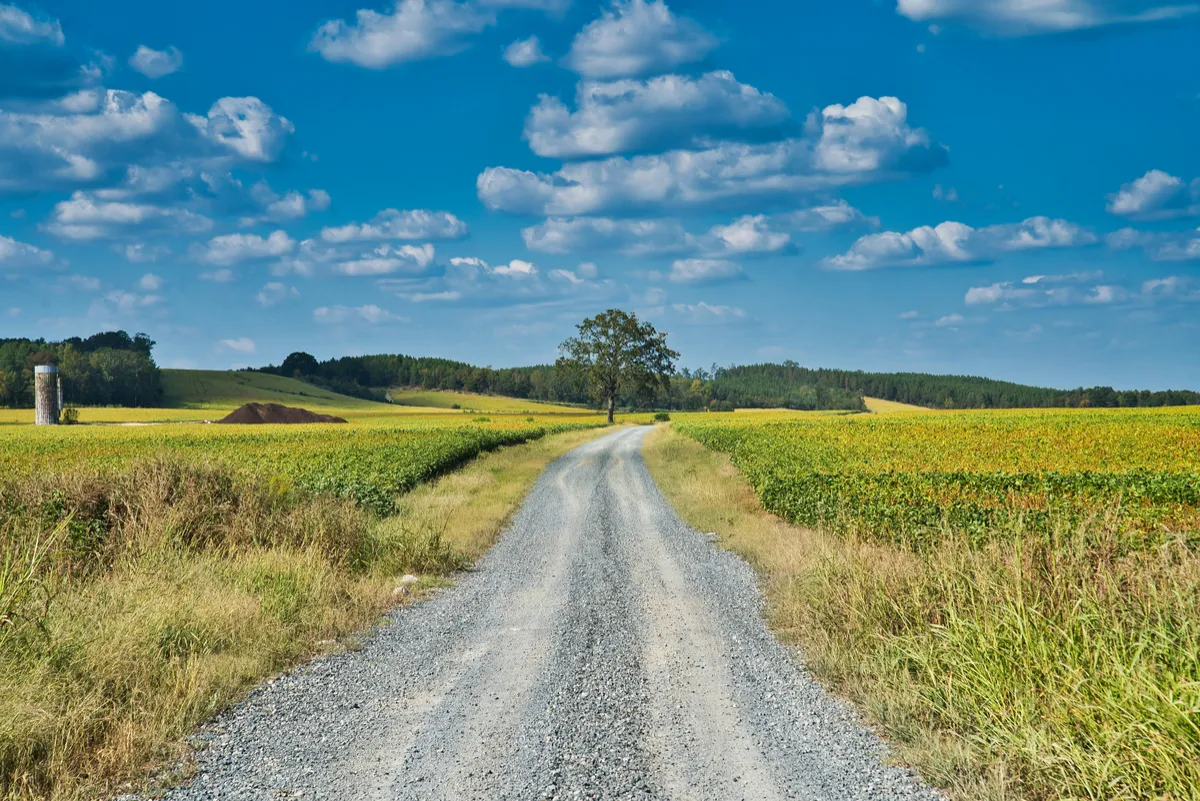
Road Access, Low-Water Crossings, and Easements: Don't Buy a Lot You Can't Get To
By Kyle Ritter | Anders Pierce Realty
You can redo a kitchen. You can't redo the road to your house.
Access is one of the first things I check on any lot, because when it's wrong, nothing else matters. There are really three questions: Do you have the legal right to get to the lot? Can you physically get there every day, in any weather? And who pays to keep it that way? Here's how to answer all three before your option period runs out.
Question 1: Do You Have Legal Access?
A dirt road you drove in on during a showing is not proof of anything. Legal access means one of two things:
The lot touches a public road, or
There's a recorded easement giving the lot the right to cross someone else's land to get to one.
Where to check:
The survey. It should show road frontage or the access easement, with its width and location.
The title commitment. Schedule B lists the exceptions, meaning things the policy won't cover. A standard Texas owner's title policy lists "no right of access to and from the Land" as a covered risk, but the title company can carve things out. If the commitment won't insure access, treat that as a big flashing sign.
The easement document itself. Get a copy. Confirm it runs with the land (so it transfers to you), how wide it is, and whether it says anything about maintenance or gates.
"The neighbor doesn't mind" is not access. Handshake permission goes away when the neighbor sells. Texas law does have something called an easement by necessity, but that's a lawsuit, not a plan. Solve access before you close or walk.
While you're reading the survey, flip it around: look for easements across your lot too. Shared driveways, utility lines, and pipelines can all limit where you build.
Question 2: Can You Physically Get There, Every Day?
This is the Hill Country part. Plenty of roads out here cross creeks at low-water crossings, and some lots have one on the only route in and out.
After the July 2025 floods, nobody around here needs convincing that water moves fast in these hills. The National Weather Service's rule is simple: Turn Around, Don't Drown. Their numbers: about 12 inches of rushing water can carry away most cars, and 2 feet can carry away SUVs and trucks.
So ask:
Is there a low-water crossing between this lot and the highway? Is there a second way out?
How often does that crossing close? Ask neighbors. They know.
Could an ambulance or fire truck get to the house in a storm?
During heavy rain, Comal County posts road closures through the County Engineer's Office on the county website, and the state's DriveTexas site covers state highways. Look at the route you'd actually drive.
My rule: visit a finalist lot twice. Once on a normal weekday, and once after a good rain or at rush hour. If you'd hate that drive in the dark during a storm, take it seriously now.
Question 3: Who Maintains the Road?
There are three common setups out here:
Road type | Who maintains | What to verify |
|---|---|---|
County or state road | The county or TxDOT | Call the county and confirm the road is actually county-maintained, not just named like one |
HOA or POA road | The association, from dues | Dues, reserves, any planned special assessments, gate rules |
Private road | The owners who use it | A recorded road maintenance agreement that says who pays for what |
The private road is where I see the most headaches. Without a recorded agreement, maintenance is whoever cares the most, and that tends to become the newest owner.
It also matters for financing. Agency loan guidelines generally want private roads protected by a permanent recorded easement, and many want a recorded maintenance agreement. FHA, VA, and USDA also want all-weather access. Ask your lender about the specific road before the option period ends, not at underwriting.
Don't Forget Your Own Driveway
Your driveway is part of access too, and it's often the biggest single line in site work on a sloped lot. A few things to know:
County permit. In unincorporated Comal County, a driveway that connects to a county road needs a Private Improvement within the Public Right-of-Way (PIPROW) permit from the County Engineer's Office. You meet with a right-of-way inspector on site, and the county reviews drainage and any culvert under the driveway.
Grade. A steep driveway is a daily-life issue, a safety issue, and a resale issue. Ask your builder where the gentlest route is.
Length. Every foot is base material, maybe a culvert, and future maintenance.
The money side of driveways is covered in Slope, Rock, and Site Work.
Copy-and-Paste Questions for the Listing Agent
Is the access road public, private, or HOA-maintained?
If private, is there a recorded easement and road maintenance agreement? Can you send them?
Are there any low-water crossings on the route? Any history of the road closing in heavy rain?
Are there any easements across this lot, recorded or not?
Does the current survey show the access easement?
The Bottom Line
Legal access, physical access, and maintenance. Get all three in writing during your option period. A lot you can't reliably get to is not a bargain at any price. For how access fits into the full lot review, see Buying a Lot in the Hill Country.
If a lot has a private road, a shared driveway, or a creek crossing and you're not sure what you're looking at, text me at 830-998-4412. Send the listing and I'll help you figure out what to ask for before your option period ends.
Kyle Ritter | Anders Pierce Realty | 830-998-4412 | [email protected]
This article is for educational purposes only and isn't legal, title, or lending advice. Easements and access rights depend on specific documents, so have a Texas real estate attorney and your title company review them, and confirm loan requirements with your lender.
